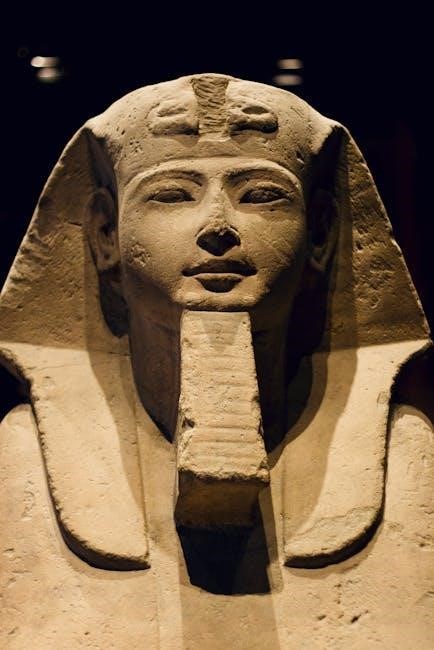
Egyptian symbols, deeply rooted in their culture, offer a fascinating glimpse into their beliefs and worldview, with readily available PDF resources aiding study.
Hieroglyphic writings, fully formed from the beginning, present a complex system that baffled scholars for centuries, until breakthroughs in decipherment occurred.
These ancient inscriptions, like those found in the Pyramid Texts (1881), reveal a rich tapestry of symbolic representation, now accessible through modern research.
Historical Context of Hieroglyphs
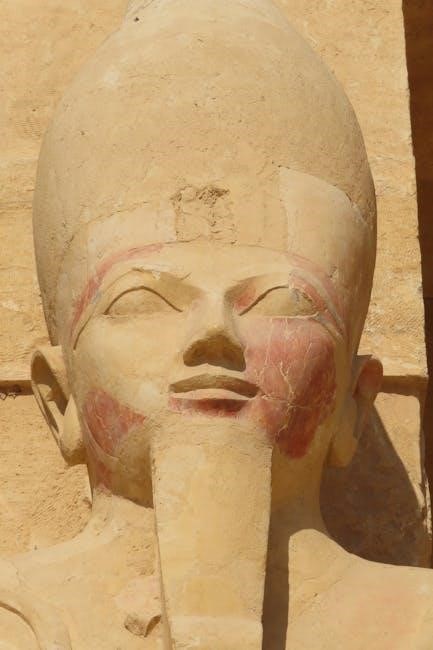
Hieroglyphs emerged in ancient Egypt around 3200 BCE, initially used for religious texts and royal inscriptions, evolving into a complex writing system over millennia.
Early examples appear fully formed, suggesting either development on now-lost materials or a remarkably swift invention. These weren’t merely a writing system; they were intrinsically linked to religious beliefs and the power of the pharaohs.
Canaanite miners adopted an alphabet, inscribing gifts to Hathor, demonstrating early interaction and adaptation of writing forms. The system’s longevity is remarkable, continuing in use for over 3,500 years, undergoing changes but retaining core principles.
Understanding this historical trajectory, often detailed in accessible PDF guides, is crucial for interpreting the symbolism embedded within each character and inscription.
The Discovery of the Rosetta Stone
The Rosetta Stone, unearthed in 1799 during Napoleon’s Egyptian campaign, proved pivotal in deciphering hieroglyphs, unlocking centuries of mystery surrounding ancient Egyptian writing. This granodiorite stele contained the same decree inscribed in three scripts: Hieroglyphic, Demotic, and Ancient Greek.
The Greek text, being readily understandable, provided the key to unlocking the others. Prior to this discovery, the meaning of hieroglyphs remained largely unknown, baffling scholars for generations.
Its discovery ignited intense scholarly interest, paving the way for Jean-François Champollion’s breakthrough in 1822. Detailed analyses and reproductions of the stone are readily available in numerous PDF resources.
The Rosetta Stone remains a symbol of linguistic and archaeological triumph, fundamentally changing our understanding of ancient Egypt and its rich symbolic language.
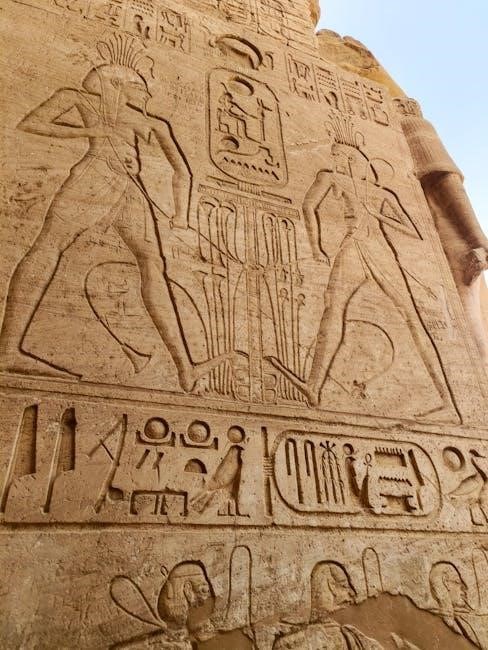
Key Egyptian Symbols and Their Interpretations
Egyptian symbols – the Ankh, Scarab, Eye of Horus, and more – held profound meaning, explored in detail through accessible PDF guides and academic studies.
The Ankh: Symbol of Life
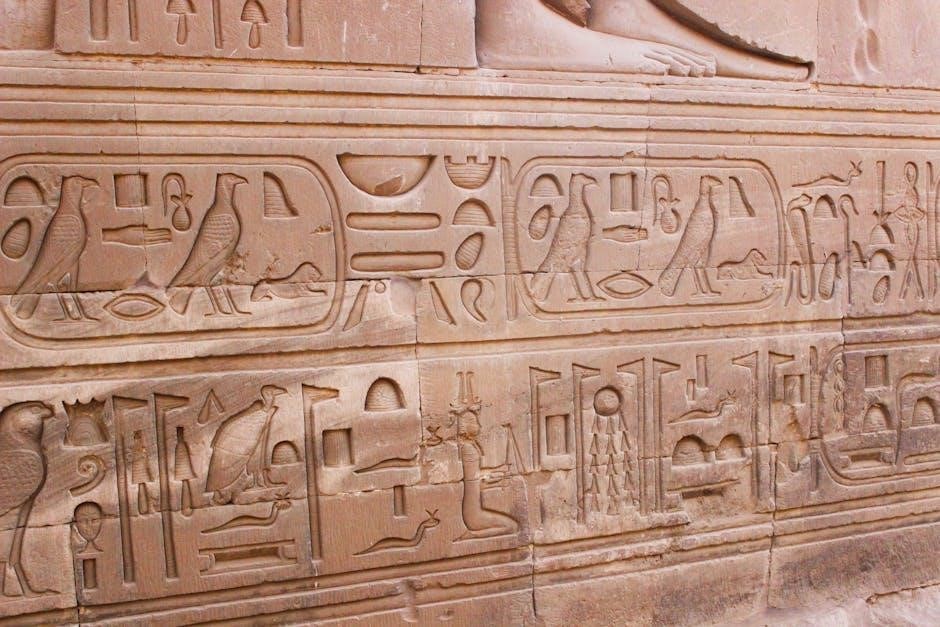
The Ankh, a potent Egyptian symbol, represents life itself – eternal life, specifically. Often depicted in the hands of deities or offered to pharaohs, it signifies the gift of immortality and rejuvenation.
Its looped shape is theorized to represent the sun’s movement across the sky, or the union of male and female principles. Detailed interpretations and visual representations are readily available in numerous PDF resources dedicated to Egyptian symbolism.
Understanding the Ankh requires delving into Egyptian beliefs about the afterlife and the cyclical nature of existence. These beliefs are thoroughly documented and explained within scholarly PDF guides, offering a comprehensive understanding of its significance.
The Ankh wasn’t merely a decorative element; it was a powerful amulet believed to bestow life and protection upon its bearer, a concept explored extensively in related academic publications.
The Scarab Beetle: Rebirth and Transformation
The Scarab Beetle held immense religious significance for the ancient Egyptians, embodying themes of rebirth, renewal, and transformation. Observing the beetle rolling dung balls across the land, they associated it with the sun god Ra pushing the sun across the sky.
This connection cemented the scarab as a symbol of creation and the daily resurrection of the sun. Detailed analyses of this symbolism, alongside numerous illustrations, can be found in specialized PDF guides on Egyptian iconography.
Amulets shaped like scarabs were incredibly popular, often inscribed with protective spells and placed over the heart of the deceased to ensure a successful afterlife, as detailed in academic PDFs.
Studying the scarab provides insight into Egyptian cosmology and their profound understanding of the natural world, readily accessible through online databases and scholarly resources in PDF format.
The Eye of Horus: Protection, Health, and Restoration
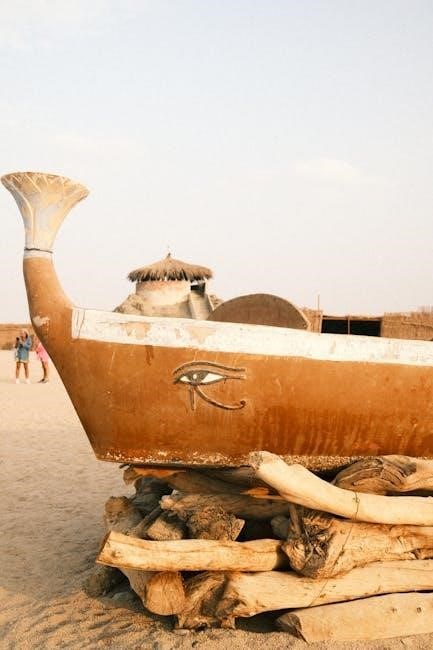
The Eye of Horus, also known as the Wedjat, was a powerful symbol of protection, royal power, and good health in ancient Egypt. Legend recounts its origin from the battle between Horus and Seth, where Horus lost his eye, later magically restored.
Representing wholeness and healing, the eye was frequently depicted on amulets, offering safeguarding against evil spirits and ensuring well-being. Comprehensive visual guides and interpretations are available in dedicated PDF resources.
The eye’s components, each with specific mathematical significance, were also used as fractions in measurements, demonstrating its practical application beyond religious belief, as explored in scholarly PDFs.
Detailed analyses of the Wedjat’s symbolism, its variations, and its prevalence in Egyptian art are readily accessible through online databases and academic publications available in PDF format.
The Djed Pillar: Stability and Endurance
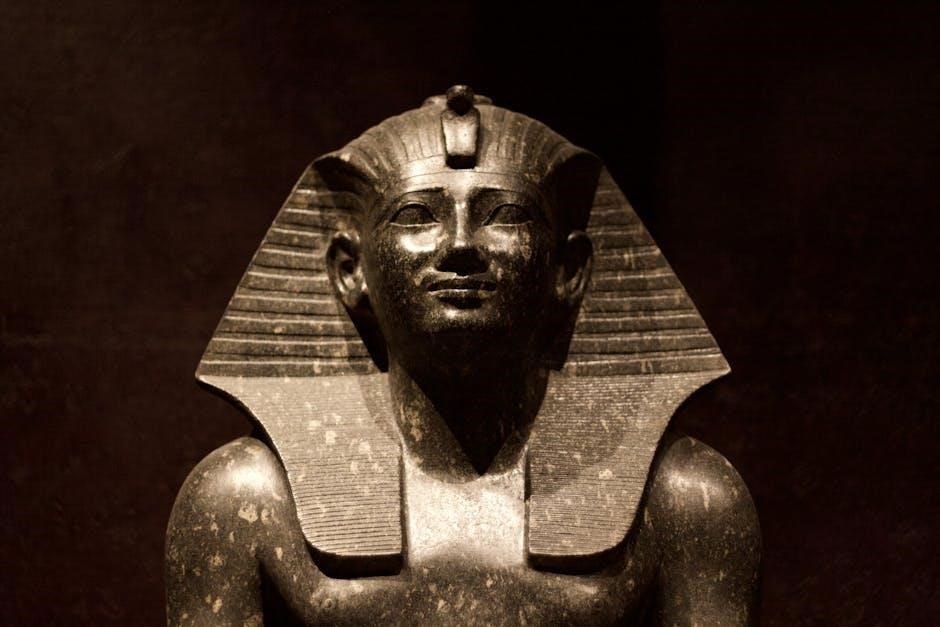
The Djed Pillar, a distinctive symbol resembling a column with a broad base and four parallel lines, represented stability, endurance, and permanence in ancient Egyptian belief. It was closely associated with the god Osiris, representing his spine and resurrection.
Often depicted in funerary contexts, the Djed symbolized the backbone of Osiris, ensuring his continued existence in the afterlife and offering similar stability to the deceased. Detailed illustrations and explanations can be found in numerous PDF guides.
Rituals involving the “raising of the Djed” were significant ceremonies symbolizing the restoration of order and the king’s power, as documented in historical texts available as PDFs.
Scholarly articles and comprehensive PDF resources delve into the Djed’s architectural presence and its symbolic role in reinforcing the foundations of Egyptian society and belief systems.
The Was Scepter: Power and Dominion
The Was scepter, a long staff with a forked base and often adorned with a canine head, embodied power, dominion, and control in ancient Egypt; It was a potent symbol frequently held by deities and pharaohs, signifying their authority and divine right to rule.
Representing the strength and authority of the gods, particularly Set, the Was scepter was a crucial emblem in religious ceremonies and royal iconography. Detailed analyses are available in specialized PDF documents.
Its presence in tomb paintings and temple reliefs underscores its importance in both earthly and afterlife realms, as explored in academic PDF publications.
Numerous PDF guides offer insights into the Was scepter’s connection to concepts of kingship, magical power, and the maintenance of cosmic order within Egyptian civilization.
Hieroglyphic Writing System
Hieroglyphs, a complex system, evolved over time, utilizing both ideograms and phonograms, with comprehensive guides available in accessible PDF formats.
Evolution and Development of Hieroglyphs
Hieroglyphic writing didn’t emerge gradually; the earliest examples appear fully developed, suggesting either prior use on perishable materials or a remarkably swift invention. This initial form, however, wasn’t static. Over centuries, the system evolved, becoming more streamlined and adaptable to various surfaces and purposes.
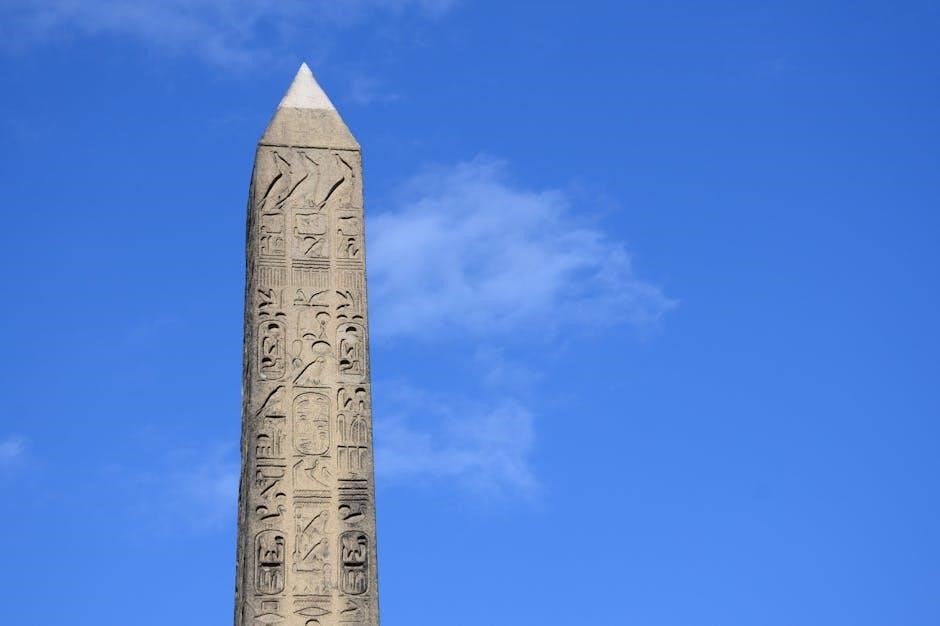
Initially, hieroglyphs were primarily used for monumental inscriptions – adorning temple walls, tombs, and obelisks. As administrative needs grew, more cursive forms, like hieratic and demotic, developed for everyday writing on papyrus. These simplified scripts retained the core principles of the hieroglyphic system but allowed for faster and more efficient record-keeping.
Understanding this evolution is crucial when studying Egyptian symbolism, as the meaning and context of a symbol could shift depending on the script used and the period in which it was created. Numerous PDF resources detail this development, offering insights into the nuances of the writing system.
Understanding Hieroglyphic Grammar
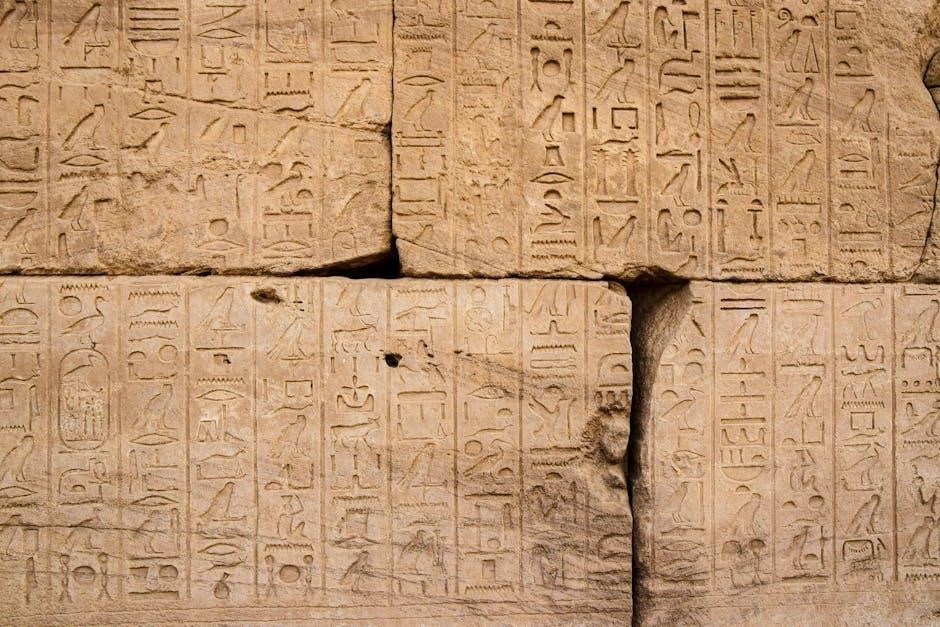
Hieroglyphic grammar differs significantly from modern languages, presenting unique challenges to translation. It’s not simply an alphabet; symbols function as phonograms (representing sounds) and ideograms (representing concepts). Determining which function a symbol serves requires careful contextual analysis.
Word order isn’t fixed, and verbs are often embedded within nouns, making direct translation complex. Understanding how verbs are translated is key to accurate interpretation, as a single phrase can have multiple meanings without proper grammatical understanding. The absence of vowels further complicates matters, requiring scholars to infer them based on Coptic, a later stage of the Egyptian language.
Fortunately, numerous PDF guides and academic resources are available to aid in deciphering this intricate system, providing detailed explanations of grammatical rules and offering practical examples for study.
Hieroglyphs as Phonograms and Ideograms
Hieroglyphs operate on a dual system: phonograms represent sounds, similar to an alphabet, while ideograms depict entire concepts or objects. A single glyph can function as both, adding layers of complexity to decipherment. For example, a depiction of a mouth can represent the sound “r” (phonogram) or the concept of “mouth” itself (ideogram).
Distinguishing between these functions is crucial for accurate translation, requiring a deep understanding of context and Egyptian thought. The same symbol can drastically alter a phrase’s meaning depending on its interpretation. This nuanced system highlights the artistic and intellectual sophistication of ancient Egyptian writing.
Numerous PDF resources detail these intricacies, offering comprehensive guides to identifying and interpreting both phonographic and ideographic elements within hieroglyphic texts.
Symbols in Egyptian Art and Architecture
Egyptian art and architecture are replete with symbolism, from pyramid construction to temple reliefs, all detailed in accessible PDF guides for study.
Color played a vital role, enhancing symbolic meaning within these artistic expressions, offering deeper insights into their beliefs.
Symbolism in Pyramid Construction
Pyramids weren’t merely tombs; they were potent symbols embodying the Egyptian belief in resurrection and the pharaoh’s ascent to the afterlife, detailed in numerous PDF resources.
Their shape, resembling a primeval mound, represented the land emerging from the chaotic waters of Nun, the beginning of creation. The eastward-facing slopes symbolized the sun’s rising, connecting the pharaoh with the sun god Ra.
Internal chambers and passageways were meticulously aligned with cardinal directions and astronomical events, reflecting a deep understanding of cosmology. The pyramid complex, including causeways and temples, mirrored the Egyptian cosmos, ensuring the pharaoh’s successful journey through the underworld.
Hieroglyphic inscriptions within the pyramids, often found in the Pyramid Texts, further reinforced these symbolic meanings, providing invaluable insights into Egyptian religious beliefs and funerary practices, readily available for study in scholarly PDFs.
Symbolic Representations in Temple Reliefs
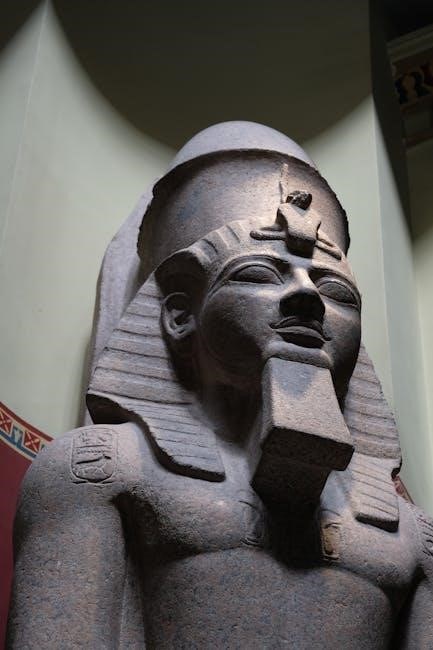
Temple reliefs served as visual narratives, meticulously depicting religious rituals, mythological scenes, and the pharaoh’s divine authority, extensively documented in accessible PDF guides.
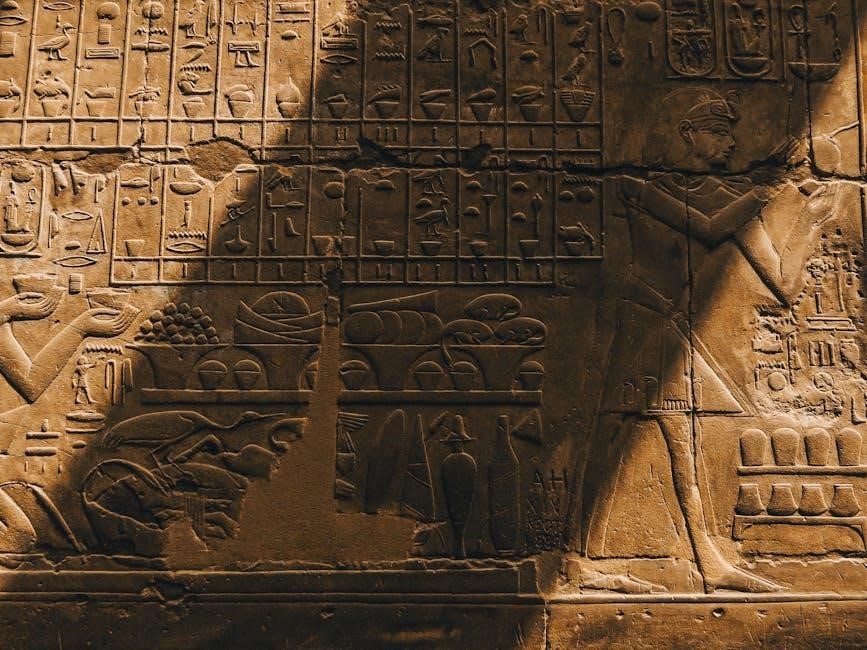
These carvings weren’t simply decorative; they were imbued with symbolic meaning. Gods were represented with specific attributes – Anubis with a jackal head, Osiris with a feathered crown – conveying their roles and powers.
Scenes of the pharaoh offering to the gods legitimized their rule and emphasized the cosmic order (Ma’at). Hieroglyphic inscriptions accompanying the reliefs provided further context and explained the depicted events.
The arrangement of scenes, the size of figures, and the use of color all contributed to the overall symbolic message, offering a rich tapestry of Egyptian belief, readily explored through detailed analyses found in academic PDF publications.
The Use of Color in Egyptian Symbolism
Color held profound symbolic significance in ancient Egypt, extending beyond mere aesthetics, with comprehensive explanations available in numerous PDF resources detailing these nuances.
Red represented power, vitality, and victory, often associated with the sun god Ra and used for destructive deities like Seth. Blue symbolized creation, rebirth, and the Nile, representing fertility and the heavens.
Green embodied vegetation, growth, and resurrection, linked to Osiris, the god of the afterlife. Yellow signified eternity, the sun’s imperishability, and divine power, frequently used in depictions of gold.
Black represented death, the fertile soil of the Nile, and regeneration. White symbolized purity, sacredness, and clarity. Understanding these color codes unlocks deeper layers of meaning within Egyptian art, as explored in scholarly PDF analyses.
Deciphering Hieroglyphs: Champollion’s Breakthrough
Champollion’s 1822 announcement, aided by the Rosetta Stone and Coptic language knowledge, unlocked hieroglyphs, detailed in accessible PDF guides today.
Jean-François Champollion and the Decipherment
Jean-François Champollion, a French scholar, dedicated his life to unraveling the mysteries of Egyptian hieroglyphs. For centuries, these intricate symbols remained indecipherable, baffling historians and linguists alike. However, with the discovery of the Rosetta Stone in 1799, a crucial key emerged. The stone contained the same text inscribed in hieroglyphic, demotic, and ancient Greek, providing a comparative basis for understanding.
Champollion’s breakthrough came from recognizing that hieroglyphs weren’t solely ideograms – symbols representing ideas – but also phonograms, representing sounds. He skillfully utilized his knowledge of Coptic, the last stage of the Egyptian language, to connect the hieroglyphic symbols to their phonetic values. His meticulous work, culminating in his 1822 announcement, revolutionized Egyptology.
Today, numerous PDF resources detail Champollion’s methods and the subsequent advancements in hieroglyphic translation, allowing enthusiasts and scholars alike to delve into the rich world of ancient Egyptian language and symbolism. These resources showcase the lasting impact of his groundbreaking achievement.
The Role of Coptic Language in Understanding Hieroglyphs
The Coptic language proved indispensable in deciphering Egyptian hieroglyphs, acting as a crucial bridge to understanding the ancient tongue. As the final stage of the Egyptian language, directly descended from the language spoken during the time of the pharaohs, Coptic retained recognizable linguistic features. Jean-François Champollion keenly recognized this connection.
While hieroglyphs had fallen out of everyday use, Coptic continued to be spoken and written, primarily within the Coptic Orthodox Church. This provided a living vocabulary and grammatical structure that Champollion could compare to the ancient inscriptions. By identifying Coptic equivalents for names and words within the hieroglyphic texts, he began to unlock their phonetic values.
Numerous PDF guides and academic resources now highlight the significance of Coptic in Egyptological studies, demonstrating how its preservation enabled the translation of a lost language and a deeper understanding of Egyptian symbols and their meanings.
Modern Approaches to Hieroglyphic Translation
Contemporary hieroglyphic translation extends beyond Champollion’s initial breakthroughs, employing sophisticated computational linguistics and digital technologies. Researchers now utilize extensive databases and algorithms to analyze patterns within hieroglyphic texts, improving accuracy and efficiency.
Online databases of Egyptian symbols, often available as PDF downloads, provide comprehensive catalogues of glyphs and their potential meanings, aiding in contextual interpretation. Statistical analysis helps determine the most probable readings of ambiguous signs, while comparative linguistics draws parallels with other ancient languages.
Furthermore, advancements in imaging technology allow for detailed examination of inscriptions, revealing subtle details previously unseen. These modern methods, combined with traditional philological approaches, continue to refine our understanding of Egyptian symbols and their complex cultural significance, making knowledge more accessible.
Resources for Further Study (PDF Focus)
Numerous PDF guides detail Egyptian symbols, while online databases and academic publications offer in-depth exploration of hieroglyphs and their meanings.
Online Databases of Egyptian Symbols
Several online platforms serve as invaluable resources for exploring Egyptian symbols and their interpretations, often offering downloadable PDF materials. These databases compile extensive collections of hieroglyphs, categorized by meaning, phonetic value, and historical period. Researchers can access detailed analyses of individual symbols, tracing their evolution and usage across different contexts.
Websites dedicated to ancient Egypt frequently feature searchable databases, allowing users to pinpoint specific symbols and uncover associated information. Many provide high-resolution images of hieroglyphs from temple reliefs, tomb paintings, and papyri, facilitating visual study. Furthermore, some platforms offer interactive tools for transliterating and translating hieroglyphic texts, aiding in the decipherment process. Accessing these resources often requires a stable internet connection and, in some cases, registration or subscription.
Recommended PDF Guides to Hieroglyphs
Numerous PDF guides cater to varying levels of expertise, from introductory overviews to advanced grammatical analyses of Egyptian hieroglyphs. These downloadable resources often provide structured lessons, vocabulary lists, and exercises for practicing reading and writing. Many guides focus on specific aspects of the writing system, such as determinatives, phonetic complements, or common phrases.
Beginners may benefit from guides that emphasize the iconic nature of hieroglyphs, illustrating how symbols represent objects and concepts; Intermediate learners can explore more detailed grammars, delving into verb conjugations and sentence structure. Advanced students might seek specialized PDFs covering specific texts, like the Pyramid Texts or the Book of the Dead. Careful evaluation of the author’s credentials and the guide’s scope is recommended before committing to a particular resource.
Academic Journals and Publications on Egyptian Symbolism
Scholarly exploration of Egyptian symbolism thrives in numerous academic journals, often with articles available as PDF downloads through university libraries or online databases. Publications like the Journal of Egyptian Archaeology and Ägypten und Levante frequently feature research on hieroglyphic interpretation and the cultural context of ancient symbols.
These publications present in-depth analyses, often challenging established interpretations and offering new perspectives. Accessing these resources requires navigating academic search engines and potentially institutional subscriptions. Furthermore, specialized monographs and edited volumes, sometimes available as PDFs, provide comprehensive treatments of specific symbols or thematic areas. Researchers continually refine our understanding of these ancient meanings, building upon decades of dedicated study.