9/11 Coloring Pages PDF: A Comprehensive Overview
Exploring readily available 9/11 coloring pages in PDF format reveals resources designed for remembrance and education. These pages often depict memorial imagery‚
offering a sensitive approach to a difficult historical event.
Understanding the Context of 9/11
To appropriately utilize 9/11 coloring pages‚ grasping the historical context is paramount. The events of September 11‚ 2001‚ represent a pivotal and profoundly tragic moment in American history‚ and indeed‚ global history. Four coordinated terrorist attacks by the Islamic terrorist group al-Qaeda against the United States resulted in immense loss of life and lasting societal impact. Two planes were flown into the Twin Towers of the World Trade Center in New York City‚ a third struck the Pentagon in Arlington‚ Virginia‚ and the fourth crashed in a field in Shanksville‚ Pennsylvania.
These attacks led to nearly 3‚000 fatalities‚ encompassing citizens of over 90 countries. Beyond the immediate devastation‚ 9/11 triggered significant geopolitical shifts‚ including the launch of the “War on Terror” and increased security measures worldwide. Understanding this context is crucial when considering the use of coloring pages‚ ensuring they are employed as tools for respectful remembrance and age-appropriate education‚ rather than trivializing the gravity of the events. The memorial imagery often found within these pages serves as a poignant reminder of the lives lost and the resilience demonstrated in the aftermath.

It’s important to acknowledge the trauma associated with 9/11 and approach the topic with sensitivity‚ particularly when engaging with children.
The Purpose of 9/11 Coloring Pages
The primary purpose of 9/11 coloring pages extends beyond simple artistic expression; they serve as tools for remembrance‚ education‚ and emotional processing. These pages aim to introduce the events of September 11‚ 2001‚ to younger generations in a sensitive and age-appropriate manner‚ fostering understanding of a significant historical moment. They can facilitate conversations about loss‚ courage‚ and the importance of peace.
Furthermore‚ coloring can act as a therapeutic outlet‚ allowing individuals to engage with difficult emotions through a creative and calming activity. The act of coloring itself can be meditative‚ providing a space for reflection and remembrance. The imagery often focuses on memorial sites‚ flags‚ and symbols of unity‚ promoting a sense of collective mourning and respect.
These resources aren’t intended to depict the graphic details of the attacks‚ but rather to honor the victims and acknowledge the impact of the tragedy. They offer a starting point for discussions about resilience‚ community‚ and the enduring spirit of those affected‚ ensuring the memory of 9/11 is preserved for future generations.
Target Audience for These Pages
The target audience for 9/11 coloring pages is remarkably diverse‚ spanning children‚ adolescents‚ and even adults seeking a reflective activity. However‚ the primary focus lies on elementary and middle school students – those who were either too young to remember the events or hadn’t yet been born. These pages provide a gentle introduction to a complex historical tragedy‚ tailored to their developmental understanding.
For younger children‚ the emphasis is on simple imagery and themes of remembrance‚ focusing on symbols like flags and memorial sites. Older children and teenagers might engage with more nuanced depictions‚ prompting discussions about the impact of the attacks and the importance of peace. Adults may utilize these pages as a personal form of remembrance or as a tool for facilitating conversations with children.
It’s crucial to consider age appropriateness when selecting coloring pages‚ ensuring the content is sensitive and avoids graphic depictions. Educators and parents can leverage these resources to foster empathy‚ historical awareness‚ and a deeper understanding of the significance of 9/11 within a broader context.
Availability of 9/11 Coloring Pages in PDF Format

Numerous online resources offer 9/11 coloring pages in readily accessible PDF format. A simple web search reveals a variety of options‚ ranging from dedicated memorial websites to educational platforms and printable activity sites. Many organizations and artists have created these pages as a tribute and educational tool‚ making them freely available for download.
PDF format ensures easy printing on standard paper sizes and compatibility across various devices. Websites often categorize pages by complexity‚ allowing users to select designs appropriate for different age groups. Some resources offer themed collections‚ focusing on specific aspects of the 9/11 memorial or the heroism displayed by first responders.
Beyond individual websites‚ educational resource platforms like Teachers Pay Teachers also host 9/11 coloring pages‚ often as part of larger lesson plans. While some resources are free‚ others may require a small purchase. The widespread availability of these PDFs underscores the enduring desire to remember and educate future generations about this pivotal moment in history.
Free vs. Paid 9/11 Coloring Page Resources
The landscape of 9/11 coloring pages presents a mix of free and paid resources‚ catering to diverse needs and budgets. A significant number of websites and memorial organizations offer downloadable PDFs at no cost‚ driven by a desire to promote remembrance and education without financial barriers.
These free resources often feature simpler designs suitable for younger children‚ focusing on symbolic imagery like flags‚ doves‚ and memorial structures. However‚ the quality and artistic detail can vary. Paid resources‚ typically found on platforms like Teachers Pay Teachers or specialized art websites‚ often provide more intricate and professionally designed coloring pages.

Paid options may include larger collections‚ themed sets‚ or pages designed for older children and adults. These resources frequently come with accompanying educational materials or historical context. The choice between free and paid ultimately depends on the desired level of detail‚ the age of the user‚ and the need for supplementary educational content. Both options serve the important purpose of honoring the memory of 9/11.

Types of Images Featured in 9/11 Coloring Pages
A review of available 9/11 coloring pages reveals a range of imagery‚ carefully selected to balance remembrance with sensitivity. Common depictions include the Twin Towers of the World Trade Center‚ often shown before the attacks‚ symbolizing the skyline and the lives lost. American flags are frequently featured‚ representing patriotism and national unity in the face of tragedy.
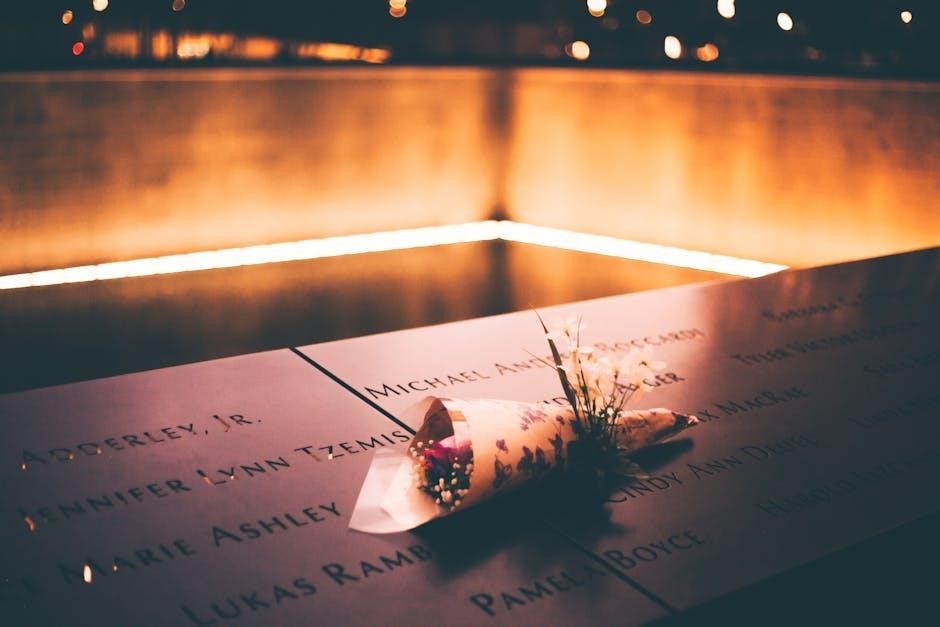
Memorial imagery‚ such as the 9/11 Memorial & Museum’s reflecting pools‚ is also prevalent‚ offering a visual representation of the lasting tribute. Images of first responders – firefighters‚ police officers‚ and paramedics – are common‚ honoring their bravery and sacrifice. Doves‚ symbolizing peace and hope‚ frequently appear as a counterpoint to the devastation.
More abstract designs may incorporate dates‚ ribbons‚ or symbolic representations of resilience. It’s important to note that depictions of the actual attacks themselves are generally avoided in coloring pages intended for children‚ prioritizing respectful and age-appropriate content. The focus remains on remembrance‚ honor‚ and the spirit of unity following the events of September 11th.
Memorial Imagery and Respectful Representation

Crucially‚ 9/11 coloring pages prioritize respectful representation of the tragedy‚ focusing on memorial imagery rather than graphic depictions of the events. The 9/11 Memorial’s reflecting pools are a recurring motif‚ symbolizing remembrance and the void left by the loss of life. Images often feature the names of those who perished‚ subtly incorporated to honor their memory.
Flags flown at half-mast‚ symbolic doves representing peace‚ and scenes of unity and support are common. The emphasis is on conveying a sense of solemnity and respect‚ avoiding imagery that could be disturbing or traumatizing‚ particularly for younger children. Illustrations of first responders are presented as heroes‚ highlighting their courage and selflessness.
Designers of these pages demonstrate sensitivity by steering clear of depictions of the planes crashing or the towers collapsing. Instead‚ they opt for imagery that promotes healing‚ remembrance‚ and a commitment to preventing future tragedies; The overall goal is to create a space for reflection and learning‚ fostering empathy and understanding through art.
Educational Value for Children
9/11 coloring pages‚ when presented appropriately‚ offer a unique educational opportunity for children to learn about a significant historical event. They serve as a starting point for age-appropriate conversations about remembrance‚ loss‚ and the importance of unity. These pages can introduce the concept of national tragedy and the impact it had on American society.
Through coloring‚ children can engage with the imagery associated with 9/11‚ prompting questions and fostering a deeper understanding of the event’s significance. Educators and parents can use these pages to discuss the bravery of first responders‚ the resilience of the nation‚ and the values of peace and tolerance.
Furthermore‚ the act of coloring itself can be therapeutic‚ allowing children to process their emotions and express their feelings in a safe and creative way. These resources can complement classroom lessons or serve as a family activity to honor the memory of those lost. It’s vital to frame the discussion with sensitivity and focus on the positive aspects of remembrance and community.
Age Appropriateness Considerations
Determining the suitability of 9/11 coloring pages requires careful consideration of a child’s age and emotional maturity. Younger children (ages 5-7) may not fully grasp the gravity of the event and could be frightened by certain imagery. For this age group‚ simpler depictions focusing on remembrance and heroism are preferable‚ avoiding graphic details.

Older children (ages 8-12) can begin to understand the historical context‚ but it’s crucial to provide guidance and answer their questions honestly and sensitively. Coloring pages for this age group can include more detailed imagery‚ but should still avoid overly disturbing content. Discussions should emphasize the importance of respecting the victims and their families.
Teenagers (ages 13+) may benefit from exploring more complex representations of 9/11‚ but it’s essential to acknowledge the potential for emotional distress. Parents and educators should be prepared to offer support and resources if needed. Always prioritize a child’s emotional well-being and tailor the experience to their individual needs.
Psychological Impact and Sensitivity
Introducing 9/11 coloring pages necessitates a profound awareness of the potential psychological impact‚ particularly for children who may not have directly experienced the event but are sensitive to emotional cues. The imagery‚ even in simplified form‚ can evoke feelings of sadness‚ fear‚ and anxiety.
It’s vital to approach the topic with utmost sensitivity‚ ensuring a safe and supportive environment for expression. Coloring can be a therapeutic outlet‚ allowing children to process complex emotions non-verbally. However‚ it’s crucial to monitor their reactions and provide reassurance.
Avoid forcing participation or pushing for detailed discussions if a child is hesitant. Focus on positive themes like remembrance‚ resilience‚ and the bravery of first responders. Be prepared to address questions honestly and age-appropriately‚ acknowledging the tragedy while emphasizing hope and healing. Recognize that individual responses will vary‚ and respect each child’s emotional boundaries.
Using Coloring as a Coping Mechanism
Coloring‚ as a creative activity‚ offers a valuable coping mechanism for processing difficult emotions associated with sensitive historical events like 9/11. The repetitive motions and focused attention can be incredibly grounding‚ providing a sense of calm and control amidst feelings of distress or anxiety.
For children‚ who may lack the verbal skills to articulate their feelings‚ coloring provides a non-threatening outlet for emotional expression. The act of choosing colors and filling in shapes can be empowering‚ allowing them to externalize internal experiences.
Specifically with 9/11 themed coloring pages‚ the process can facilitate remembrance and reflection. It allows individuals to engage with the event in a safe and controlled manner‚ fostering a sense of closure or understanding. The artistic process itself can be cathartic‚ transforming potentially overwhelming emotions into something tangible and manageable.

Furthermore‚ coloring encourages mindfulness‚ drawing attention to the present moment and reducing rumination on past trauma. It’s a simple yet powerful tool for self-soothing and emotional regulation.
The Role of Art in Processing Trauma
Art‚ in its various forms‚ serves as a potent vehicle for processing trauma‚ offering avenues for expression that bypass the limitations of language. For events as profoundly impactful as 9/11‚ artistic representation becomes crucial for collective mourning and individual healing.
Coloring pages‚ while seemingly simple‚ fall within this spectrum of therapeutic art forms. They provide a structured yet open-ended medium for engaging with difficult memories and emotions. The act of creation—selecting colors‚ applying them to the page—can be deeply restorative.
Literature and visual arts surrounding 9/11‚ as highlighted in analyses of American 9/11 literature‚ demonstrate how artistic expression conveys the psychological experiences of trauma‚ particularly in children. Coloring pages can mirror this function‚ offering a personal and accessible means of confronting and understanding the event’s lasting impact.
By engaging with imagery related to 9/11 through coloring‚ individuals can begin to externalize their feelings‚ fostering a sense of control and promoting emotional regulation. Art becomes a bridge between internal experience and external expression‚ aiding in the complex process of healing.

9/11 Literature and Artistic Representations of Trauma
The aftermath of 9/11 spurred a significant wave of artistic and literary responses‚ each attempting to grapple with the enormity of the tragedy and its enduring psychological effects. Analyses of American 9/11 literature reveal a consistent focus on conveying the traumatization of children and their unique experiences.
These works often explore themes of loss‚ fear‚ and the disruption of innocence‚ mirroring the emotional landscape experienced by many in the wake of the attacks. Similarly‚ visual art‚ including memorial designs and commemorative pieces‚ sought to honor the victims and provide a space for collective mourning.
9/11 coloring pages‚ while a different medium‚ participate in this broader artistic conversation. They represent a simplified‚ yet accessible‚ form of visual storytelling‚ allowing individuals to engage with the event’s imagery and symbolism.
Just as literature and art can offer catharsis and promote understanding‚ coloring pages can serve as a tool for processing emotions and fostering remembrance. They provide a creative outlet for reflecting on the historical significance of 9/11 and its lasting impact on society‚ echoing the sentiments found within more complex artistic expressions.
Historical Accuracy in Coloring Pages

Maintaining historical accuracy within 9/11 coloring pages presents a unique challenge. While simplification is inherent in the medium‚ it’s crucial to avoid misrepresentation or trivialization of the events. Depictions of the World Trade Center‚ the Pentagon‚ and the crash site in Shanksville must be approached with sensitivity and respect.
Coloring pages should accurately reflect the known facts of the day‚ including the time sequence of events – the initial impacts‚ the subsequent collapses‚ and the heroic actions of first responders. Avoiding sensationalism or graphic imagery is paramount‚ focusing instead on memorial elements and symbols of resilience.
The inclusion of details like the American flags‚ the names of the victims (where appropriate and with consent)‚ or representations of the memorial sites can enhance the educational value and historical context.
However‚ it’s vital to acknowledge the limitations of the format. Coloring pages cannot fully encapsulate the complexity of 9/11‚ and should be used as a starting point for further learning and discussion. Responsible creators will prioritize factual accuracy and respectful representation over artistic license‚ ensuring a meaningful and informative experience.